
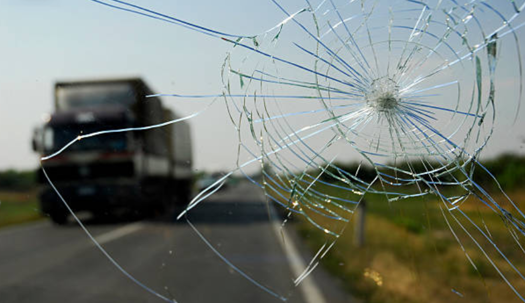
After a crash with a semi or other large truck, people around you may sound very sure of what happens next, but much of what they say is simply wrong. A friend might tell you that the truck driver will automatically lose, an insurance adjuster may hint that you have no case because you were “partly to blame,” and online forums can make it sound like you cannot afford legal help at all. In the middle of medical appointments and car repairs, sorting truth from fiction feels impossible.
These mixed messages matter. Believing the wrong thing about a truck accident claim can quietly cost you money, limit your medical care, or even cause you to walk away from a valid case. Truck collisions in Northern Illinois involve bigger vehicles, higher insurance limits, and more complicated laws than a typical fender-bender, so the myths that float around after a crash are especially dangerous.
At DeRango & Cain, LLC, our team brings more than 100 years of combined experience to the cases we handle, and we regularly see these truck accident myths used against injured people from Rockford and across Northern Illinois. We offer free case evaluations and handle injury cases on a contingency fee basis, so we see what really happens behind insurance doors and in courtrooms. In this guide, we want to walk through the most common truck accident myths, show you how they actually play out in real claims, and give you a clearer path forward.
How Common Truck Accident Myths Put Your Claim At Risk
Most people only deal with one or two serious accidents in their lifetime, if any. Trucking companies and their insurers deal with them every day. That imbalance creates room for myths to spread. Some myths start as half-truths, others come from car accident experiences that do not translate, and some are encouraged by insurers because they make claims cheaper to resolve. When you do not know how truck cases really work, it is easy to make choices that feel reasonable in the moment but harm your claim later.
Truck accidents are rarely simple. Even in a rear-end collision on a highway in Northern Illinois, there may be layers of responsibility that go beyond the person behind the wheel. Federal trucking regulations, company safety policies, maintenance practices, and cargo loading decisions all play a role in how and why a crash happens. Myths that treat a truck case as “just another accident” ignore this complexity and can leave important evidence on the table.
We routinely see trucking companies and insurers start shaping the story of a crash within hours. They send adjusters and investigators, secure vehicle data, and interview their own driver. Injured people, by contrast, are focused on emergency care, surgeries, or just getting home from the hospital. In that gap, myths can take hold. Our goal here is to call those out directly and walk you through what really matters in a Northern Illinois truck accident claim.
Myth 1: The Truck Driver Is Always The Only One At Fault
After a serious crash, it can feel natural to focus on the truck driver. You saw their vehicle cross the line, fail to stop in time, or turn in front of you. Many people assume that if there is a claim at all, it is simply you versus the driver. In reality, the driver is often only one piece of a much larger picture. The choices made by the trucking company, shipper, maintenance shop, or others can be just as important in causing the collision.
For example, a driver may have been on the road far too long because a dispatcher pushed them to meet a delivery window that was difficult to meet while following hours-of-service rules. The truck might have had worn brakes because a maintenance contractor cut corners or because a carrier skipped recommended service to keep the truck moving. A trailer may have been overloaded or improperly secured by a loading crew, which changes how quickly the truck can stop or how it handles in a sudden maneuver. On the road, these issues show up as driver error, but the root cause often lives higher up the chain.
From a legal standpoint, these choices matter because they create additional parties that may be responsible for your damages. A motor carrier that hires, trains, and supervises its drivers can be held accountable for unsafe practices. A company that owns or maintains the tractor or trailer can be responsible for mechanical failures. Shippers and loading companies can share fault if an imbalanced or overloaded trailer contributed to the crash. In Illinois, your claim is not limited to a single defendant, and identifying all responsible parties can increase the insurance coverage that is realistically available to you.
Uncovering these layers requires more than just reading a police report. We look at maintenance records, dispatch notes, driver qualification files, load documents, and company policies. As a firm that is not afraid of complex litigation and is prepared to take cases all the way to trial if needed, we know that holding the right companies accountable often means digging into how they do business, not just what happened in the moments before impact. When a crash has changed your life, you should not lose out because the spotlight stayed only on the driver while everyone else stayed in the shadows.
Myth 2: If You Were Partly At Fault, You Cannot Recover Anything
Another myth that stops people from even calling a lawyer is the belief that if they did anything wrong, they have no claim. Maybe you were a few miles over the speed limit, looked down briefly at your GPS, or hesitated at a green light. Insurance adjusters know many people feel guilty or second-guess themselves after a crash, and they often encourage this myth when it helps them avoid paying a fair amount.
Illinois uses a comparative negligence system. In plain terms, that means fault can be shared between the people involved in a crash. If a judge or jury decides you are partly responsible, your compensation can be reduced by your percentage of fault. If you are more than 50 percent to blame, you may not recover. The key is that being somewhat at fault does not automatically wipe out your rights. Application of these rules depends heavily on the facts of your case.
Consider a situation where you were going slightly over the speed limit on a highway in Winnebago County when a truck merged into your lane without checking its blind spot. The truck may have failed to yield the right of way and did not leave enough distance, especially given its longer stopping distance and size. An insurance company might argue you share blame because of your speed. A fair evaluation might still assign the majority of fault to the truck, recognizing that safe lane changes and mirrors matter more than a few miles per hour in this scenario.
We do not accept an insurer’s fault story at face value. Our team reviews crash reports, witness statements, photographs, and any available video to build a full picture. We look at the truck’s speed and braking data, the sight lines at the scene, and the choices each driver made. With more than a century of combined experience guiding people through complex cases, we have seen how comparative fault is used aggressively by defendants, and we know how to push back. Before you decide you must be at fault, it is worth having someone on your side analyze what really happened.
Myth 3: A Truck Accident Claim Works Just Like A Car Accident Claim
Many people understandably assume that a truck accident claim is just a bigger version of a car accident claim. You call the insurance company, answer some questions, maybe get your car fixed and your bills paid, and move on. The reality is that commercial trucking claims operate in a different world. The rules that govern these vehicles, the kinds of evidence available, and the way companies respond make truck cases much more complex than a typical two-car crash on a local street.
Commercial trucks are subject to federal and state regulations that do not apply to ordinary drivers. Trucking companies generally must keep driver qualification files, maintain detailed logs of driving hours and rest breaks, and follow specific inspection and maintenance schedules. There can be separate companies that own the tractor, own the trailer, employ the driver, arrange the shipment, and actually shipped the cargo. Each of these entities may have its own insurance policy and its own lawyer once a serious crash is reported.
The evidence that can help prove fault in a truck accident goes far beyond a basic police report. Many trucks have electronic control modules, sometimes called black boxes, that record speed, braking, and other data before a crash. GPS systems, onboard cameras, electronic logging devices, weigh station records, and fuel receipts can all help show where the truck was, how long it had been on the road, and whether the driver and company followed the rules. This kind of information can be lost or overwritten if no one acts quickly to preserve it.
Trucking companies and insurers understand the stakes. They often send rapid response teams to accident scenes in Northern Illinois, including the Rockford area, to inspect the vehicles, take their own photos, and talk with their driver. While an injured person is being transported to a hospital or trying to notify family, the other side is already working on its defense. Treating a truck crash like a basic car claim, with a few phone calls and forms, ignores this reality and leaves you at a serious disadvantage.
Our firm’s broad scope of handled cases and team-based approach fits the demands of truck litigation. We are used to sorting through overlapping insurance policies, employment relationships, and regulatory issues. When a case needs to go all the way to trial, we are prepared to present these complex details clearly to a jury. That depth is difficult to match if someone treats your claim as just another rear-end collision with a larger vehicle.
Myth 4: The Insurance Company Will Take Care Of Everything Fairly
After a truck accident, you may get calls from one or more insurance adjusters who sound friendly and concerned. They might say they just need your side of the story or that they want to get things wrapped up for you quickly. Many injured people in Northern Illinois assume that because the other driver was clearly at fault, the insurer will step up and handle everything fairly. These companies are not neutral referees. They are businesses focused on protecting their insured and their bottom line.
One common tactic is the quick, low settlement offer. Shortly after the crash, sometimes before you know whether you will need surgery or long-term treatment, an adjuster may offer a check that seems helpful in the moment. In exchange, you sign a release that ends your claim. If complications arise later, or if you cannot return to the same line of work, you cannot go back and ask for more. Another tactic is to ask for a recorded statement. Innocent comments about not wanting to make a big deal or being a little distracted can be used later to argue that you were mostly at fault.
Insurers also like broad medical authorizations that give them access to years of your medical history. They comb through old records looking for anything they can label as a preexisting condition. That back pain you mentioned once in a routine visit can suddenly become their explanation for the pain you have after the crash. These strategies are especially common in serious truck collisions, where the policy limits and potential exposure are higher than in a minor car accident.
We have seen these patterns play out many times. As a firm that offers free case evaluations and handles injury cases on a contingency fee basis, we are often brought in after an insurer has already tried to minimize a claim. We know how adjusters are trained and what they are looking for in statements and records. When we step in early, we can advise you on what to say, what not to sign, and how to document your injuries and losses in a way that reflects the true impact of the crash. Relying on the insurance company’s promise to take care of you puts your future in the hands of someone who answers to their employer, not to you.
Myth 5: Hiring A Truck Accident Lawyer Costs Too Much Upfront
Financial stress after a truck accident is very real. Medical bills start arriving, paychecks may stop or shrink, and everyday expenses in places like Rockford, Belvidere, or Freeport do not pause because you were hurt. Against that backdrop, it is no surprise that people worry about adding legal fees to the list. A common myth is that hiring a truck accident attorney requires a large upfront payment or hourly bills you cannot control.
In injury cases, that is not how our firm works. We operate on a contingency fee schedule for truck accident and other injury matters. That means you do not owe legal fees unless we recover compensation for you, through a settlement or verdict. Our interests are aligned with yours, because our fee is tied to the result. You do not write a retainer check to get started, and you are not billed by the hour for every phone call or email. This structure exists because people in your situation often cannot afford to pay out of pocket while they are recovering.
We also offer free case evaluations for the cases we handle. When you call us after a truck crash in Northern Illinois, we will talk through what happened, what injuries you are dealing with, and what questions you have, without any obligation to hire us. That conversation is your opportunity to understand the strengths and challenges of your potential claim, what steps you should take now, and what timeline might apply. There is no meter running and no surprise bill at the end of the call.
Choosing to move forward with a lawyer is a personal decision. From our perspective, the real cost risk often comes from going it alone against a trucking company and its insurers. Without someone experienced in these cases reviewing the offer and the evidence, it is easy to accept a number that does not come close to covering future medical care, reduced earning capacity, or the day-to-day impact of living with serious injuries. Our role is to give you a clearer picture so you can decide what is truly in your best interest.
Myth 6: You Have Plenty Of Time To Decide What To Do
Immediately after a truck accident, it may feel like everything is moving too fast. You might be dealing with emergency treatment at a facility in or near Rockford, trying to arrange childcare, or figuring out how to get your car out of a tow yard. In that chaos, it is tempting to put off making any decisions about legal help. Many people reassure themselves with the myth that there is plenty of time to sort out the claim later.
Illinois law does provide a statute of limitations, a legal deadline by which a lawsuit must be filed. However, the most important evidence in a truck case does not sit and wait for that date. Electronic control module data can be overwritten, surveillance footage from nearby businesses can be erased, and driver logs can be cycled out during normal recordkeeping. Skid marks fade, debris is cleared, and vehicles are repaired or salvaged. The more time that passes, the easier it becomes for details about speed, braking, hours on the road, and dispatch instructions to disappear.
Delays also give trucking companies and insurers more room to refine their narrative. By the time you are ready to challenge their version of events, they may have months of internal reports, statements from their driver, and opinions lined up. That does not mean you have no options if time has passed, but it does mean that acting sooner typically improves your ability to present a strong case based on complete information.
We understand that reaching out for legal guidance can feel like one more thing on an already long list. That is why we make ourselves available to take calls 24 hours a day, 7 days a week. When someone in Northern Illinois calls us after a truck crash, we can start advising on immediate steps, such as preserving photos, keeping track of medical treatment, and avoiding statements that could be misunderstood. You do not need to have every record and detail in hand before you talk to us. What matters is protecting your rights while the evidence is still within reach.
Turning Truck Accident Myths Into A Clear Plan Of Action
Truck accident myths survive because they offer simple answers to situations that are anything but simple. They tell you that only the driver matters, that one mistake on your part wipes out your claim, that the insurer will do the right thing, or that you should wait until life calms down before taking action. For someone trying to heal and keep their family afloat after a serious crash, those stories can be comforting. They can also be very costly.
By now, you have seen how these myths break down under closer inspection. Multiple companies can be responsible for what happened to you. Comparative fault does not automatically bar recovery. Truck cases involve unique evidence and regulations that demand early, careful attention. Insurance companies are looking out for themselves, and waiting too long can make it harder to prove what really happened. You do not have to sort through all of this on your own or make guesses based on secondhand advice.
At DeRango & Cain, LLC, we bring a team with more than 100 years of combined experience, a broad range of legal knowledge, and a commitment to aggressive yet meticulous representation for people harmed in truck accidents across Northern Illinois. We offer free, no-obligation evaluations and handle injury cases on a contingency fee basis, so you can get straightforward answers about your situation without taking on upfront legal fees. If a truck crash has turned your life upside down, we are ready to listen, explain your options in clear terms, and stand with you as you decide what to do next.
Call (815) 216-5911 to talk with our team about your truck accident and what these myths mean for your specific case.